Early Path & Education:
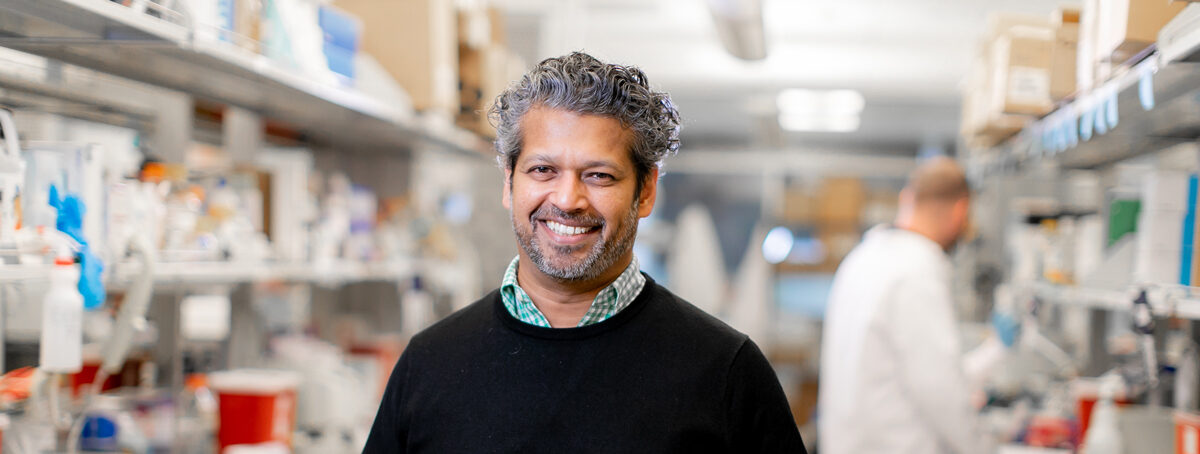
Dr. Nitin Baliga was always interested in biological sciences but didn’t know what specific path to take since the field was so broad. His regimented education in India guided him toward life sciences, earning a bachelor’s in microbiology and a master’s in marine biotechnology. After studying malaria for a year and a half, he realized it wasn’t for him and pursued a Ph.D. in microbiology in the U.S. He eventually joined the Institute for Systems Biology (ISB) in Seattle to make an impact through science, working on infectious disease, tuberculosis, and climate change. He reflected that it took many years and many trials and errors before he realized what interests him, and recognized the importance of adapting to the opportunities and resources available to make a big impact.
Scientific Interests:
Dr. Baliga is fascinated by how biological systems can “predict the future.” Through evolution, organisms imprint their experiences onto their genomes, allowing them to anticipate environmental changes—like plants preparing for daylight through circadian cycles. He is also intrigued by “bet-hedging,” where cells diversify to survive unpredictable conditions. To him, biology resembles a strategic game, and he connects these ideas to game theory and evolution.
Mentorship & Internships at ISB:
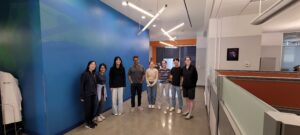
There is no single path for ISB interns, which Dr. Baliga views as both a challenge and an opportunity. He encourages interns to take risks, explore unfamiliar areas, and not fear failure. He encouraged us to think big and try out things we’ve never heard of. He believes every intern is a success story: many have gone on to lead in medicine, policy, biotech, and other industries. His own nonlinear journey, including time “lost” studying malaria, taught him that detours often lead to meaningful outcomes.
AI in Systems Biology:
Dr. Baliga believes AI is transforming research by handling repetitive, data-heavy tasks like literature review far faster than humans. He sees AI as capable of completing the “first 90%,” while humans focus on the final 10%—the creative and innovative part. He cautions, however, against overreliance on AI, especially that scientists must stay at the leading edge, asking tough questions. To him, AI is simply another powerful tool in the scientific process.
Funding Challenges & Outlook:
Facing increasing funding cuts and competition, Dr. Baliga remains an optimist. He keeps his lab adaptable, pursuing projects funded by diverse sources such as the NSF, DOE, and Gates Foundation, and even launching a company to support cancer research. His advice to young scientists: stay flexible, think globally, and go where the most exciting science is happening (even if it isn’t in the US.) If something doesn’t work out, don’t be afraid – there are always other opportunities.
Leadership and Career Advice:
Dr. Baliga believes effective leadership comes from both vision and humility. Leaders must see the big picture, recruit talented people, and communicate clearly while respecting everyone’s contributions. He creates an environment that’s leading-edge and exciting, but safe enough to take risks and fail. His guiding principle is to be able to respectfully be demanding—see potential in others and help them realize it. Dr. Baliga advises young scientists to take risks, be adaptable, and hedge their bets like biological systems. He emphasizes resilience, collaboration, and surrounding oneself with respectful, ambitious people. He encourages that as long as a scientist is enjoying what you’re doing, not hurting anybody, and making a difference, they’re doing the right thing.
Education & Outreach:
Frustrated by the abstract, test-focused education system in India, Dr. Baliga made education a central part of his lab’s mission. His work with colorful Halobacterium mutants inspired him to create engaging learning experiences. With educator Claudia Ludwig, he built scalable outreach programs where teachers train other teachers, spreading ISB’s science education model globally. This “network of amplification” continues to make STEM more accessible and exciting for students worldwide.
Personal Notes:
Outside of science, Dr. Baliga enjoys time with his wife and kids, cooking (especially “unhealthy” food for guests), and working on home projects like building patios and fountains. He loves art, film, and culture, focusing on cinematography and music rather than plot. He has traveled widely, naming his favorite locations as Greece, Mexico, southern India, and China, and dreams of visiting Australia and Southeast Asia to explore the connections between food and culture. As a father, Dr. Baliga finds joy in his children’s curiosity and confidence. They remind him to stay humble and embrace lifelong learning. Watching his daughter surpass him in running grounded him in the value of time and family.