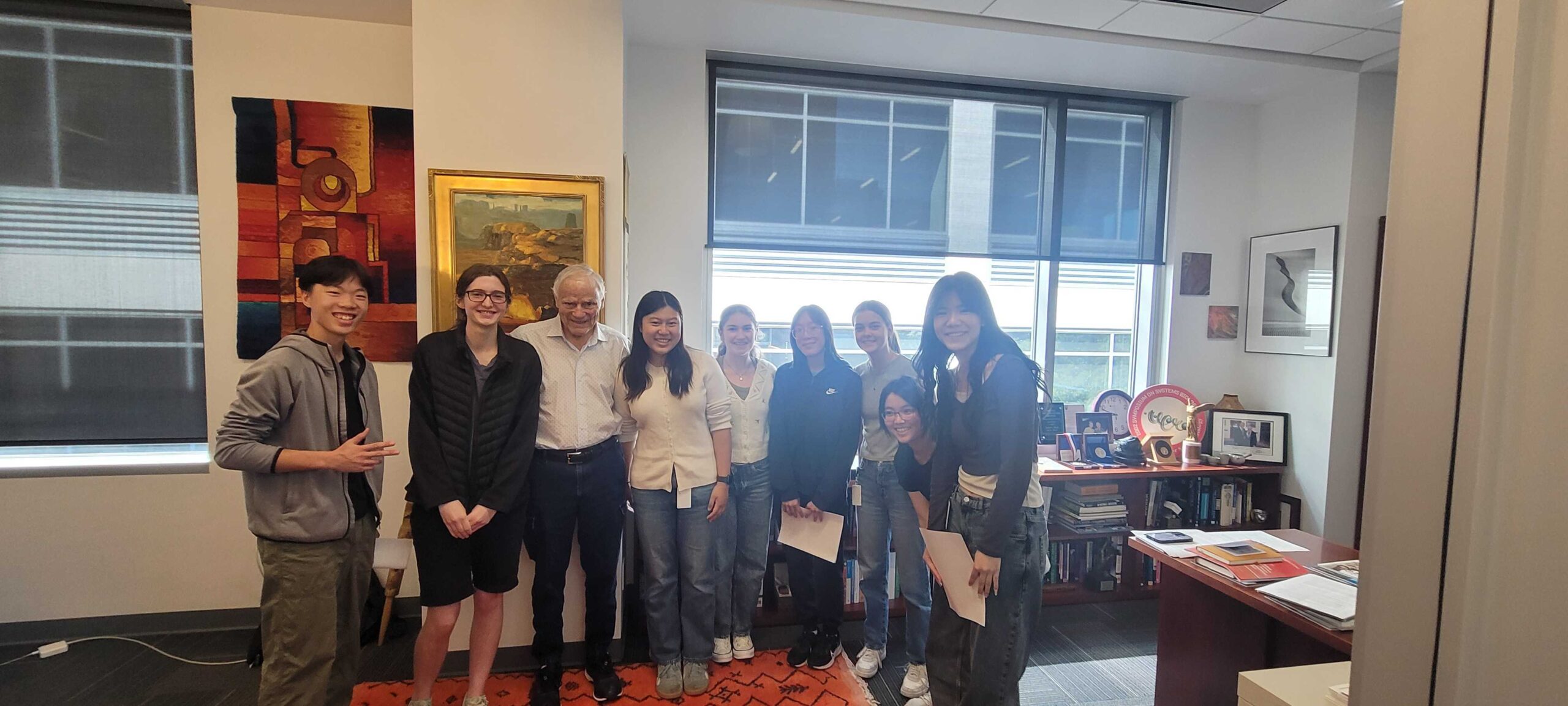
Early Life & Influences:
Dr. Leroy Hood’s fascination with human complexity was shaped by personal and family experiences. Growing up in Montana, he was influenced by his father, an electrical engineer who worked on long-distance telecommunications. Observing his father’s systematic problem-solving inspired Hood to think about biological systems as mechanisms that could be understood and engineered.
When Hood was nine, his younger brother was born with Down syndrome, and the family doctor could not explain its cause. This early mystery fueled his curiosity about biology, genetics, and human health. As DNA and chromosomes became better understood, Hood’s interest in biological complexity deepened.
His education reinforced this curiosity. Summers at his grandfather’s geology camp exposed him to scientists from Columbia, Yale, and Harvard, while engineering courses in Denver honed his technical skills. In high school, teachers in chemistry, math, and social studies encouraged debate, critical thinking, and independence. Their mentorship cultivated the curiosity that would define his career.
Educational Background:
Hood attended Caltech for his undergraduate degree where he built a foundation in biology and chemistry. He then entered Johns Hopkins for an accelerated medical program. During medical school, he became fascinated by immunology—an emerging field that captured the complexity he sought to understand. He returned to Caltech to pursue a Ph.D. in molecular immunology in the early 1960s, where he made early contributions significant enough to be asked to lecture as a second-year student.
After earning his doctorate, Hood spent three years at the National Institutes of Health as part of the U.S. Public Health Service during the Vietnam War. There he collaborated with leading scientists and developed his distinctive approach to collaborative, high-impact research.
Molecular & Systems Biology:
Returning to Caltech as a professor in 1970, Hood sought to understand biological complexity through a systems lens. He recognized that studying individual genes or proteins in isolation could not explain how living systems functioned as a whole. To meet this challenge, he built an interdisciplinary lab that included chemists, engineers, and biologists working together to create new research tools.
His team’s innovations transformed biology into a data-rich, technology-driven discipline. Among their key inventions were:
1. Automated Protein Sequencer – Enabled sequencing of proteins in minuscule quantities, allowing scientists to study vital molecules such as erythropoietin, which became essential in treating anemia and kidney disease.
2. Automated DNA Sequencer – Replaced radioactive labeling with color-coded DNA bases, revolutionizing genomics and laying the groundwork for the Human Genome Project.
These inventions fueled the biotechnology revolution. Hood co-founded companies like Amgen, focused on protein drugs, and Applied Biosystems, which commercialized his lab’s sequencing technologies. These ventures connected academia with industry, accelerating the pace of discovery.
The Human Genome Project:
Hood was a major advocate for the Human Genome Project, which aimed to map the entire human genetic code. Many scientists at Caltech initially opposed “big science” projects, fearing they would draw funding from smaller labs. Hood countered that the Human Genome Project would expand opportunities for discovery.
Working with U.S. Senator Pete Domenici, he helped secure $3 billion in federal funding over ten years while ensuring smaller research efforts remained protected. Serving on a National Academy committee, Hood helped win unanimous support for the project. By the 1990s, the Human Genome Project had transformed biology, giving scientists the ability to analyze life’s complexity at unprecedented scale.
P4 Medicine:
In the 2000s, Hood developed his vision for P4 medicine, a framework that integrates data and systems thinking into healthcare. The approach is:
1. Predictive – Using genomics and data analytics to forecast disease risks.
2. Preventive – Intervening before disease appears.
3. Personalized – Tailoring care to each individual’s biology.
4. Participatory – Involving patients and physicians in data-driven decisions.
To apply these ideas, Hood co-founded Arivale, a company focused on longitudinal studies of wellness. Recruiting 5,000 participants, Arivale generated nearly 30 peer-reviewed papers showing that wellness can be optimized and diseases detected early through integrated data from genetics, blood biomarkers, microbiomes, and wearables.
Hood emphasizes that lifestyle and environment interact with genes to shape health. His work supports a shift from reactive medicine to proactive health management.
Drug Development:
Hood’s current research focuses on peptide-based therapeutics, which target previously “undruggable” proteins such as transcription factors. His lab uses advanced DNA synthesis and viral delivery systems to:
• Screen hundreds of millions of peptide variants in parallel.
• Optimize peptide specificity and stability through large-scale mutation analysis.
• Use AI to evaluate single-cell transcriptional responses and predict therapeutic effects.
This integrated, AI-assisted approach could revolutionize drug discovery by dramatically accelerating the path from concept to clinical application.
Advice:
Throughout his career, Hood has valued curiosity, collaboration, and resilience. He advises young scientists to:
• Surround themselves with critical thinkers who challenge ideas.
• Pursue new fields every 10-15 years to stay intellectually challenged.
• Take calculated risks on ambitious ideas despite skepticism.
• Value interdisciplinary teamwork to solve complex problems.
He credits his success to the mentors who encouraged independence and creativity early in life, lessons that continue to guide his approach to science and leadership.
Vision for Future:
Hood envisions a future in which healthcare and education are transformed by technology and systems thinking. He predicts:
• Peptide therapeutics will enable interventions across the entire human proteome.
• Data-driven health will detect early disease transitions, allowing preemptive care.
• AI-augmented physicians will deliver highly personalized treatment.
• Medical education will integrate AI tools and systems biology from the ground up.
He believes that progress will depend on integrating technology, interdisciplinary collaboration, and patient participation in shaping the next generation of medicine.
Conclusion:
Dr. Leroy Hood’s career spans molecular immunology, genomics, systems biology, and predictive medicine. From early curiosity sparked by personal experience to revolutionary technological innovation, he has redefined how scientists approach biology. His vision for P4 medicine, powered by data, AI, and human ingenuity, continues to shape the future of healthcare and research—cementing his legacy as one of the most influential biomedical scientists of the modern era.