
Early Path & Education:
Dr. Heath began college as an English and music major at Baylor University and only took science courses for fun. However, he excelled at these classes and was able to become the TA for a freshman chemistry lab. So, he shifted to chemistry after joining a research lab and discovering a passion for science – all the while still playing music. Then, he followed the foundational academic track, first receiving his Ph.D. in chemical physics at Rice University and becoming a postdoc at UC Berkeley.
Graduate Work & Nanotech:
At Rice, Dr. Heath worked with a highly funded professor on large-scale laser/vacuum experiments. Him and his team took a different approach in chemistry not much explored at the time, by building materials atom-by-atom at near absolute zero. The vapor plume would cool almost instantly by a burst of helium gas burst, which causes the atoms to condense and “freeze” mid-reaction. In that supersonic zone, the molecules were near 0.1 Kelvin, and you can see the rings of shock waves where it warmed back up. This is a picture he provided, snapshotting the moment he used physics to study materials atom-by-atom:
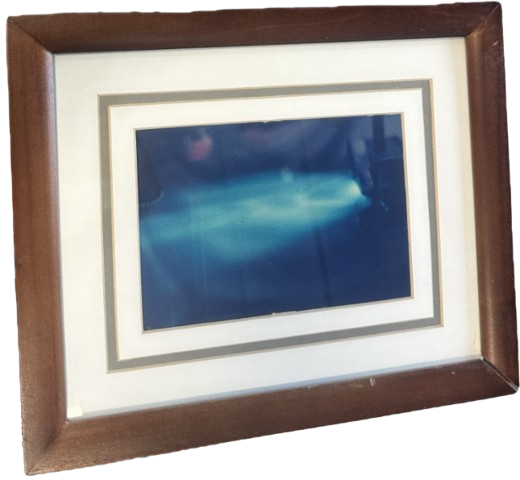
With these experiments, Dr. Heath discovered a new molecule of carbon called C60 buckyballs that ended up getting his Professor the Nobel Prize. This new discovery demonstrated how size and shape at the nanoscale radically changed material properties, essentially birthing the field of nanotechnology.
Career Progression:
During his postdoc at Berkeley, Dr. Heath shifted his major once again towards astrochemistry, starting to study molecular formation in carbon stars. Then, he joined IBM research and created nanoscale materials and devices, even with limited funding. He was later recruited to UCLA, focusing on nanotechnology – developing a molecular computer and record-small memory circuits (160,000-bits), smaller than a T cell. Here’s the model for his molecular computer project, used to demonstrate how nanoscale devices could be built:
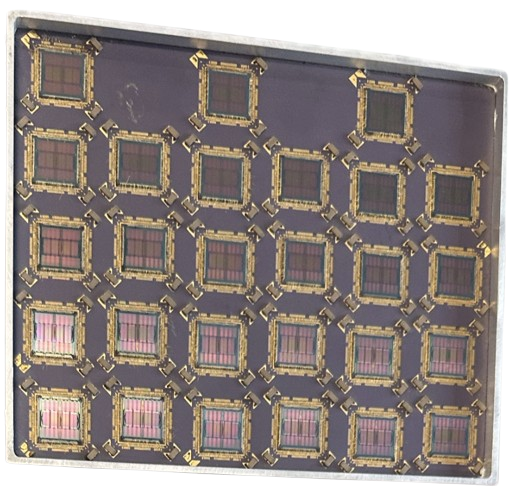
After his time at UCLA, he moved to the smaller, more tight-knit community of Caltech and pivoted toward biological applications of nanotech.
Biology & Immunotherapy Work:
At Caltech, Dr. Heath developed single-cell analysis to measure proteins, gene expression, and receptors from thousands of individual cells. This work he applied to cancer immunotherapy – identifying, cloning, and transferring T-cell receptors from healthy patients to diagnosed patients. Moreover, he used nanotech data to predict therapy responders, which contributed to major advances in previously untreatable cancers.
Current Focus at ISB:
Now, at ISB, he leads research on three main themes: immune system diversity, microbial diversity (gut microbiome), and aging. Notably, during COVID-19, Dr. Heath quickly pivoted the organization to run one of the largest U.S. studies on the virus, predicting long COVID risk from early immune markers.
AI & T-cell Biology:
Dr. Heath actively employs AI on TCR sequence “language” to map immune diversity, create predictive models, and even generate artificial immune responses in silico. He identifies immune “rules” and connects deviations from these guidelines to health risks and potentially design personalized therapies.
Scientific Philosophy & Career Advice:
Throughout his various field changes, Dr. Heath notes an ever-present throughline of curiosity-driven problem solving, and often uses one field’s tools in another. One point he emphasized was to always be uncomfortable; the moment you start to become comfortable in your environment, switch it up. This mindset is what allows him to always stay innovative. To become a good researcher, he states, is to have an insatiable curiosity and use quantitative thinking – documenting things in specific metrics rather than just generally. He credits his commitment to academia to the freedom the field provides, and ISB fosters interdisciplinary work tied to core human health themes.
Personal Notes:
Dr. Heath is an enthusiastic, multi-talented musician who plays numerous instruments including the guitar, mandolin, piano, bass, and saxophone. He even quotes one of the “craziest” experiences of his life to be designing the theme song of a French TV science series. He fervently believes that art, music, and science share a common ground of creativity and curiosity. He greatly values his collaborations with artists and diverse thinkers.