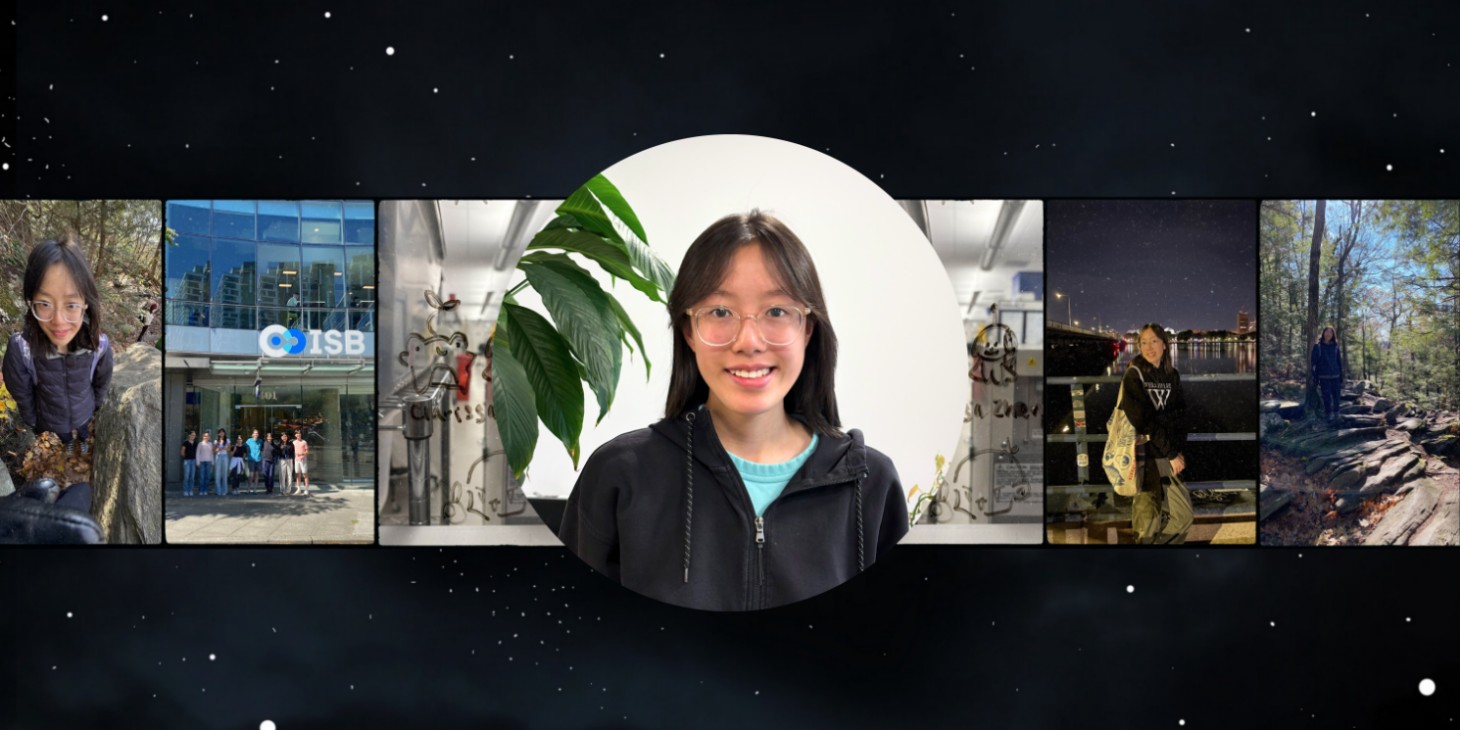
CLARISSA ZHENG
Meet Clarissa
Clarissa graduated from Interlake High School in Bellevue, Washington and is currently a first-year at Wellesley College in the Class of 2029, interested in biochemistry and astrophysics. She is fascinated by a range of science topics, including the complexities of protein biochemistry and genetics, the resilience of extremophiles, and the detection of biosignatures in exoplanet compositions. Her interests stem from her passion for applying interdisciplinary, systems research to solve biological, environmental, and astronomical questions. In her free time, Clarissa enjoys observing through telescopes, hiking, painting, playing violin, running, exploring natural and urban places, and reading literary novels.
At the Institute for Systems Biology, under the mentorship of Dr. Eric Deutsch in the Moritz Lab, Clarissa worked alongside Marie Andken on the Human Proteome Project (HPP) and RunAssessor.
During her high school senior year, she analyzed protein data from a number of proteomic databases to assess the existence of protein-coding evidence for likely pseudogenes (protein evidence score of PE5 in UniProtKB) on the HPP target list. For this project, Clarissa and Marie were two of the first authors on a paper advising UniProtKB to assign higher certainties of existence to some of the proteins.
Over the summer, Clarissa and Marie developed a Python tool called RunAssessor to automatically extract and summarize information in the form of metadata from mzML files that are deposited in public mass spectrometry data repositories. The goal of RunAssessor is to improve data reproducibility and accuracy, and large-scale data analysis. Currently, they are writing a paper detailing how RunAssessor works, its usage, and capabilities.